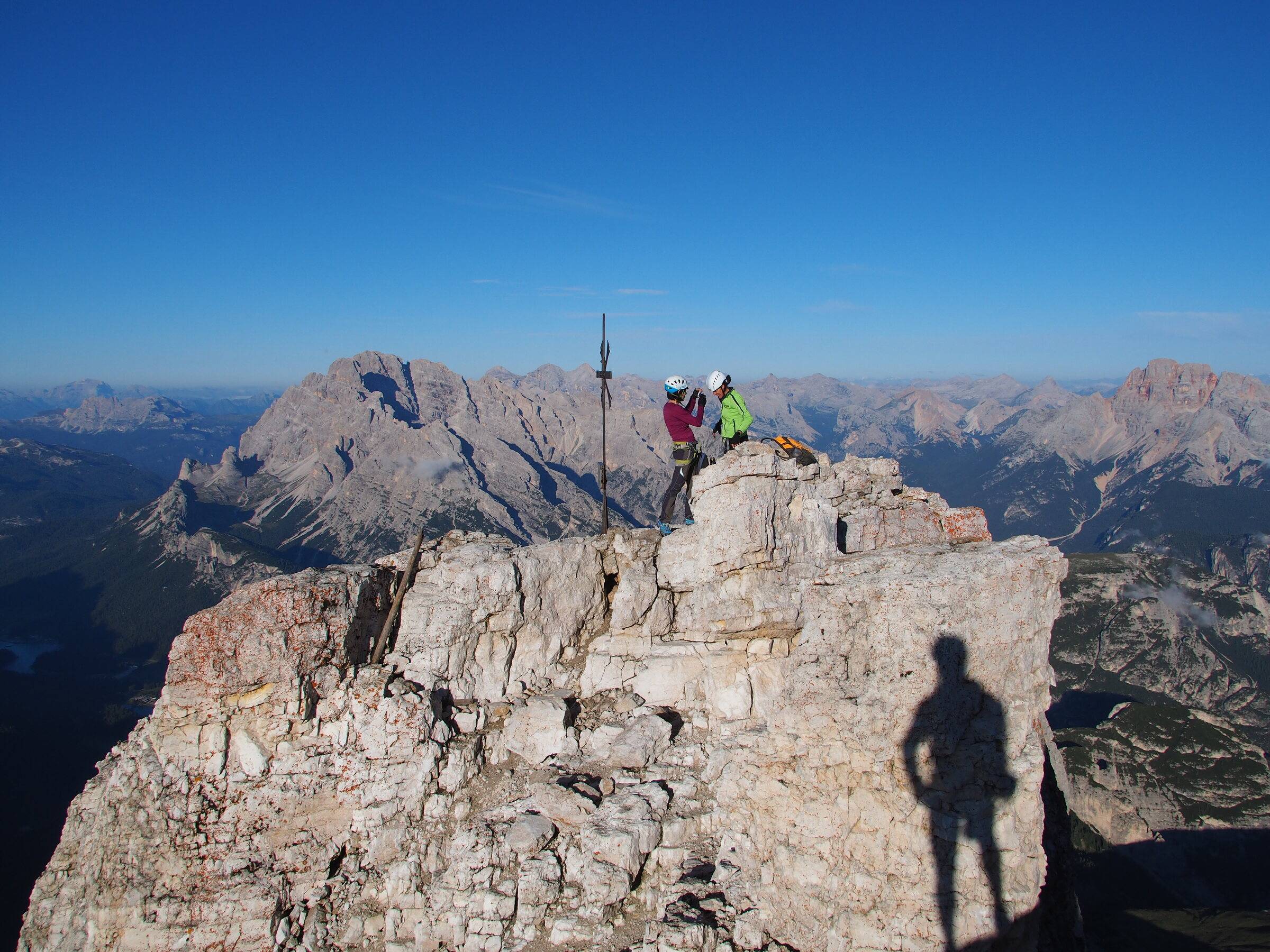

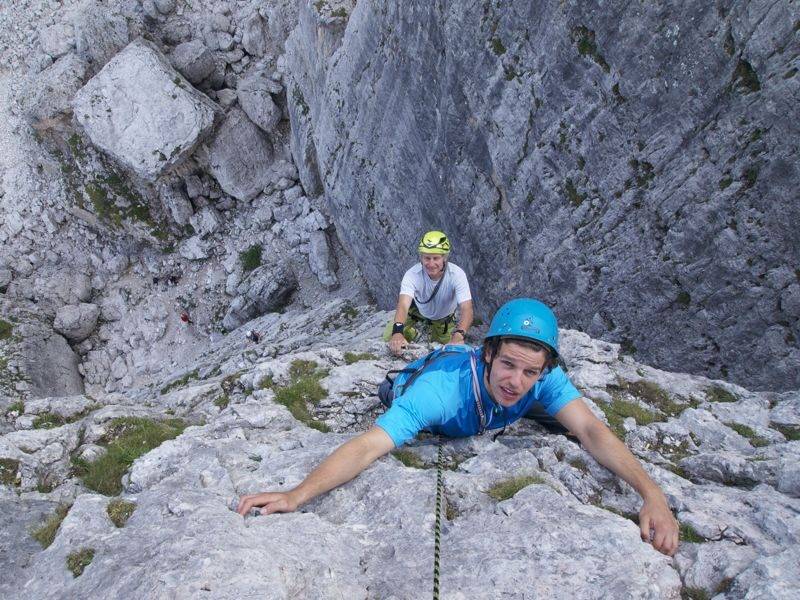
At the crag, it’s all over after 25 metres. In the Dolomites that’s where it begins: multi-pitch routes climb many rope lengths up big walls to the summit – with exposure, route finding and an adventure no crag can offer.
How does the day work?
- Early start: in summer, afternoon thunderstorms are common – by then we want to be back down.
- Approach: from a few minutes to an hour or two.
- Climbing pitch by pitch: I lead, build the belay and bring you up. You climb second, with the rope from above.
- Descent: depending on the route, on foot via a normal route or by abseiling.
What do I need?
- Climbing experience: if you climb confidently one or two grades above the route’s grade at the crag or in the gym, you have enough in reserve for a pack, exposure and unfamiliar rock.
- Stamina: a long day with many pitches is tiring – for the mind too.
- A head for heights: looking down is part of it.
- Basic knowledge of belaying and rope calls helps; I’ll show you the rest on the way.
Gear
Climbing shoes (comfortable rather than too tight), light approach shoes, helmet, harness, belay device, windproof jacket, water and a head torch. I bring the rope and protection.
Step by step to the great classics
To start with, routes in grades IV and V with good protection and a short approach are ideal:
- Torre del Lago – a steep tower above Lake Lagazuoi with a dream corner (IV / V)
- Neunerspitze – Messner direttissima – friction slabs and water grooves (IV+ / V)
- Punta Frida – the elegant, often overlooked tower at the Three Peaks
When you want more:
- Tofana di Rozes – south face – an 800-metre labyrinth above Cortina
- Sas dai Tamersc – my wall on the doorstep, with spectacular chimneys (V / VI)
The big goals:
- Peitlerkofel north face – 600 metres of north face
- Cima Scotoni south-west face – the legendary Lacedelli route (VI+)
- Monte Agner – north ridge – one of the longest rock climbs in the Dolomites
Dolomite rock is different
Routes are graded on the UIAA scale, the rock is mostly solid but can be loose in places, and many classics are protected with pitons. This is exactly where a guide makes the difference: route finding, judging rockfall, safe belays – and the certainty that you can focus entirely on the climbing.
Tell me what you have climbed so far – I’ll suggest the right route.